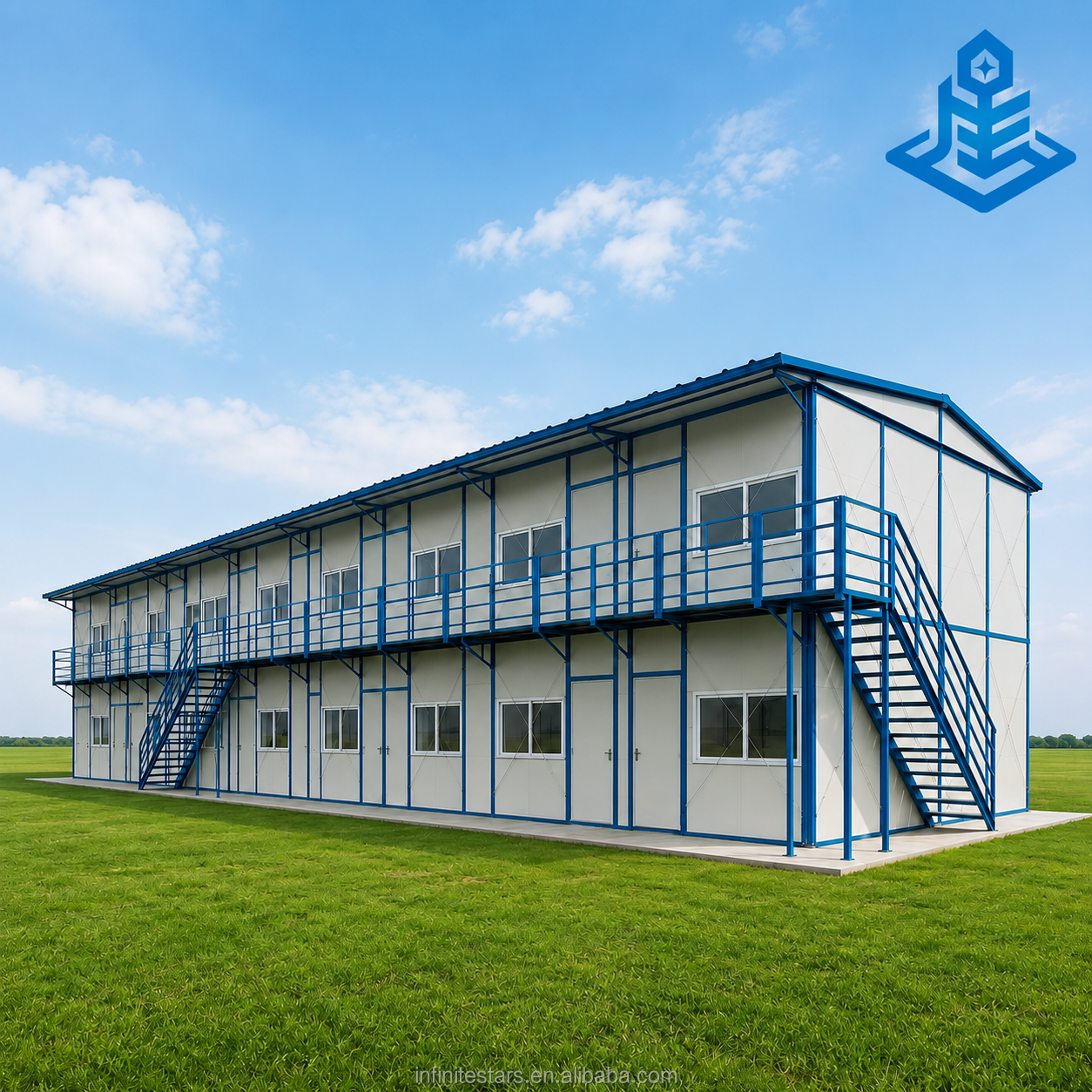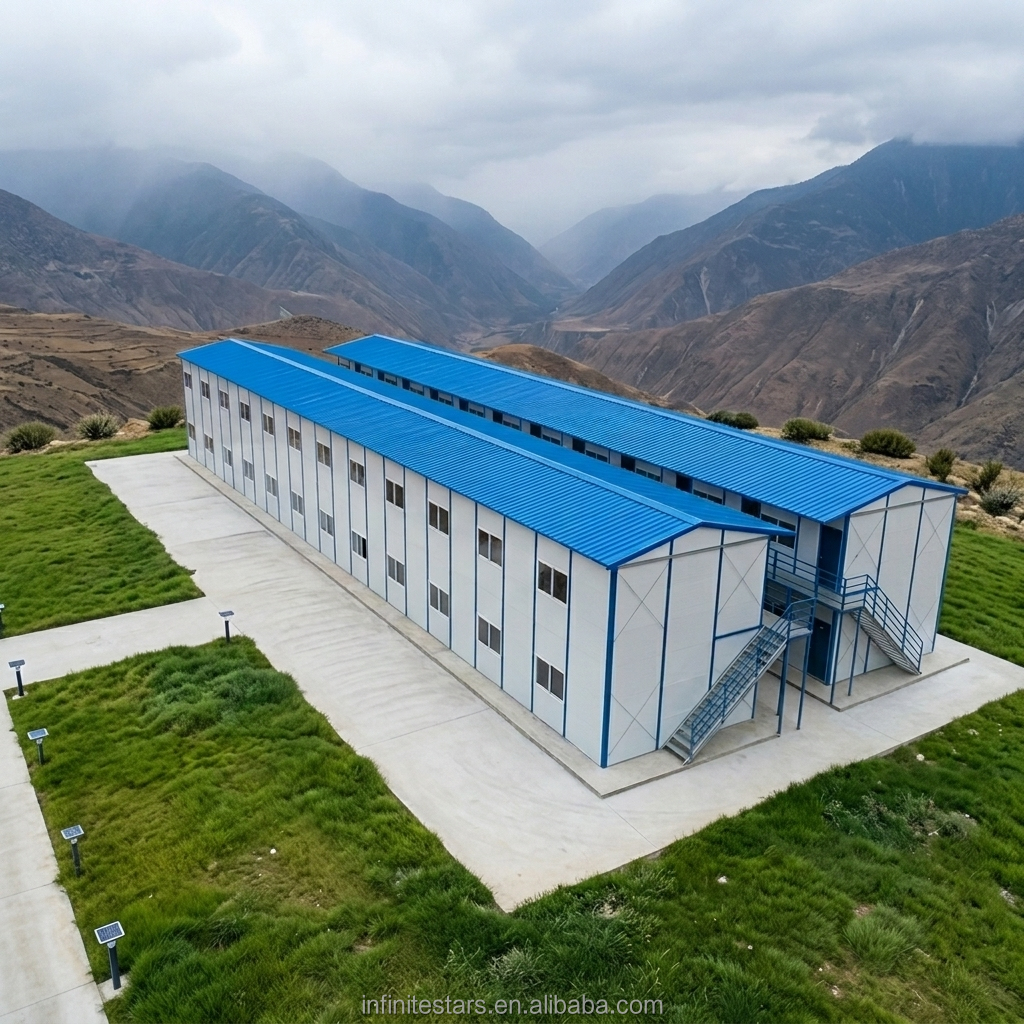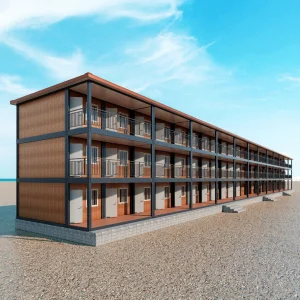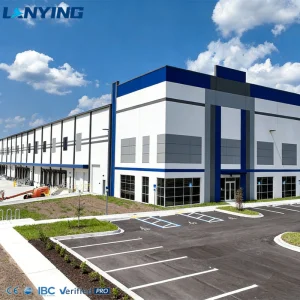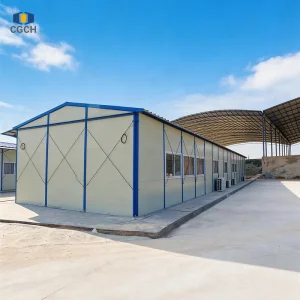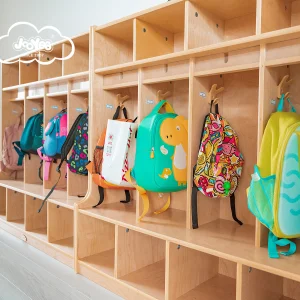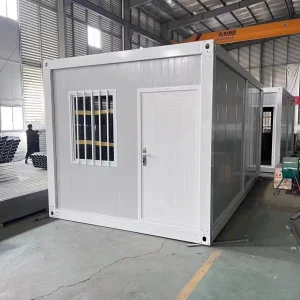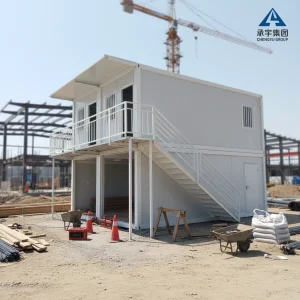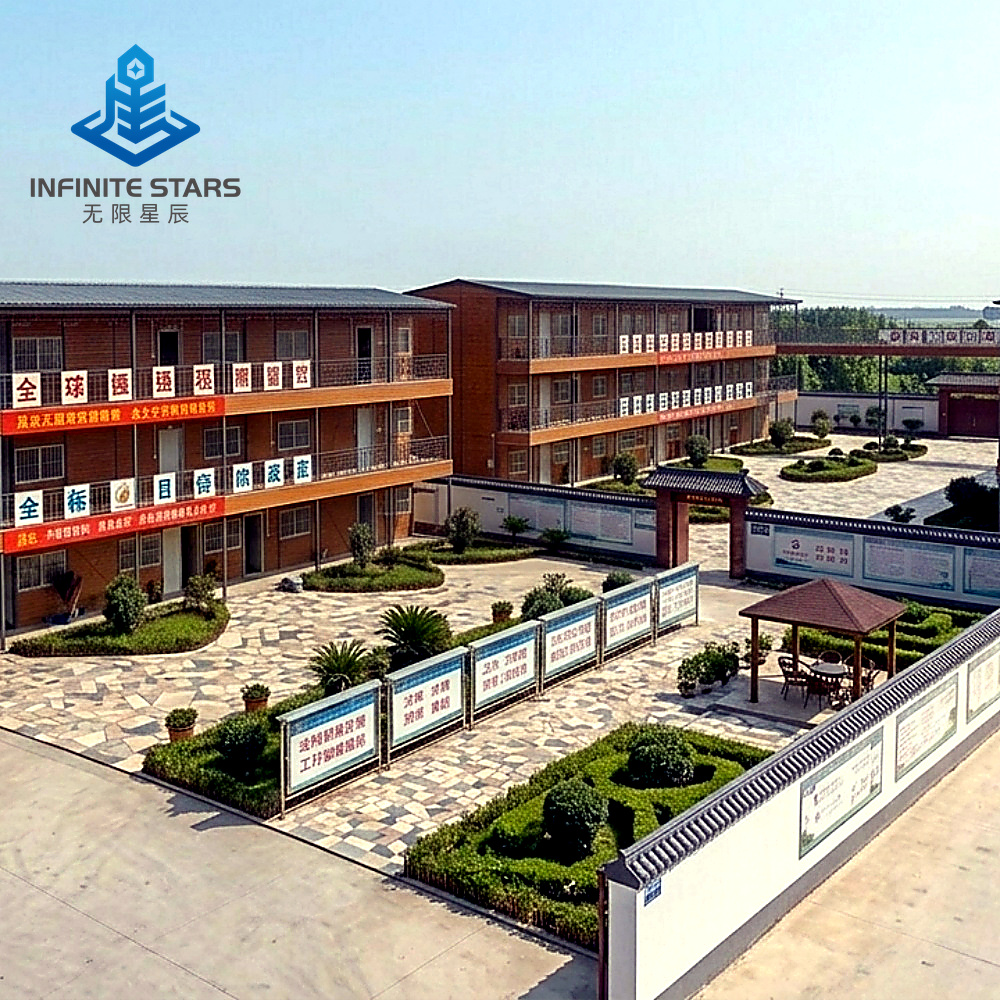
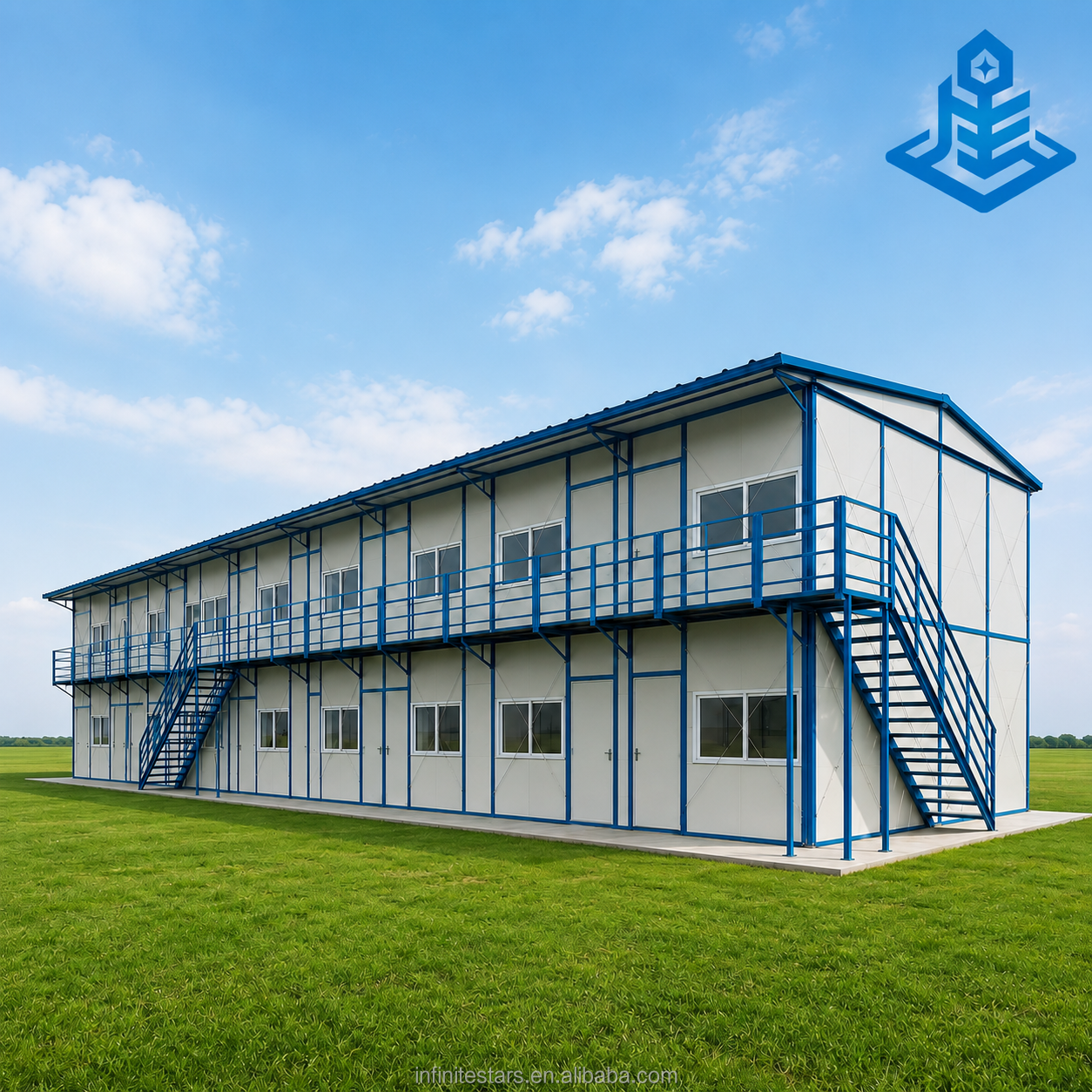
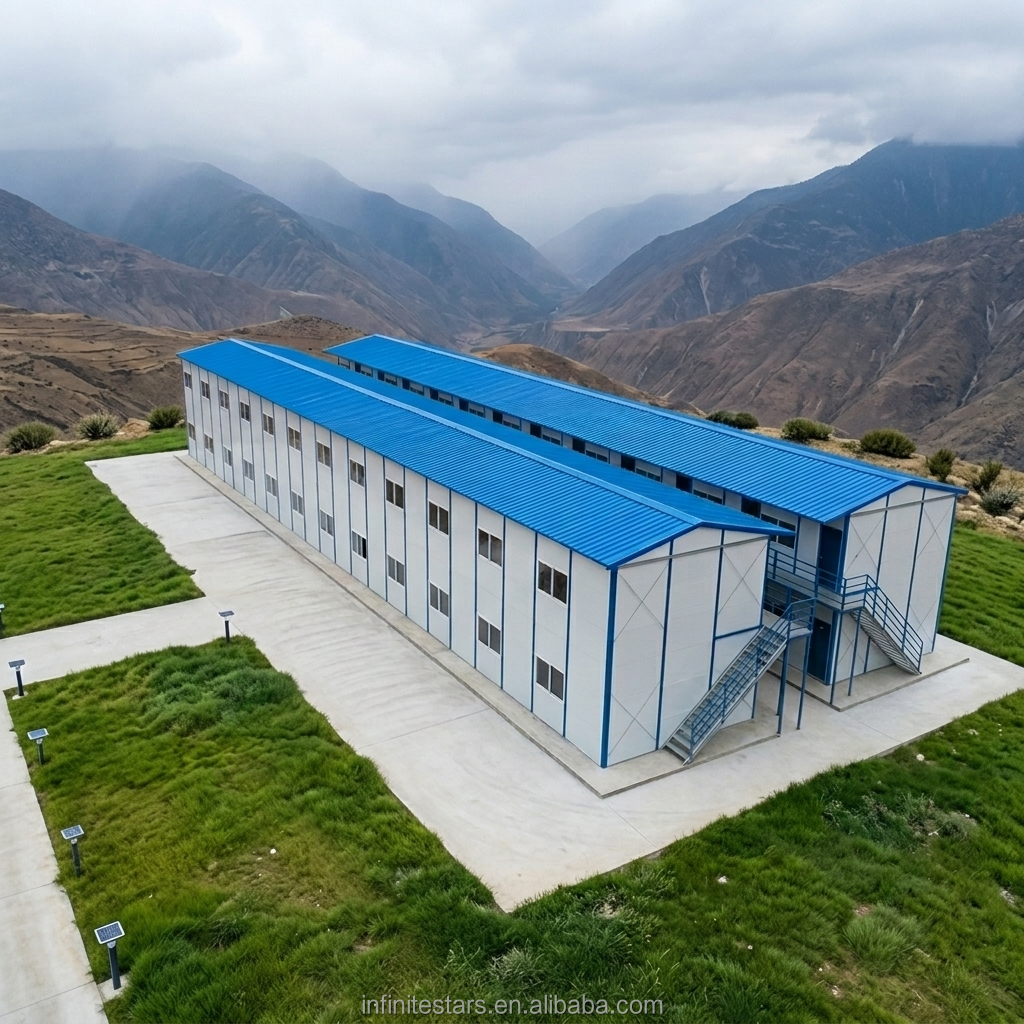
Modular School Building Two Story Prefab Classroom Wood Siding T Type Prefabricated House Community Dormitory

Product Description

Product Highlights
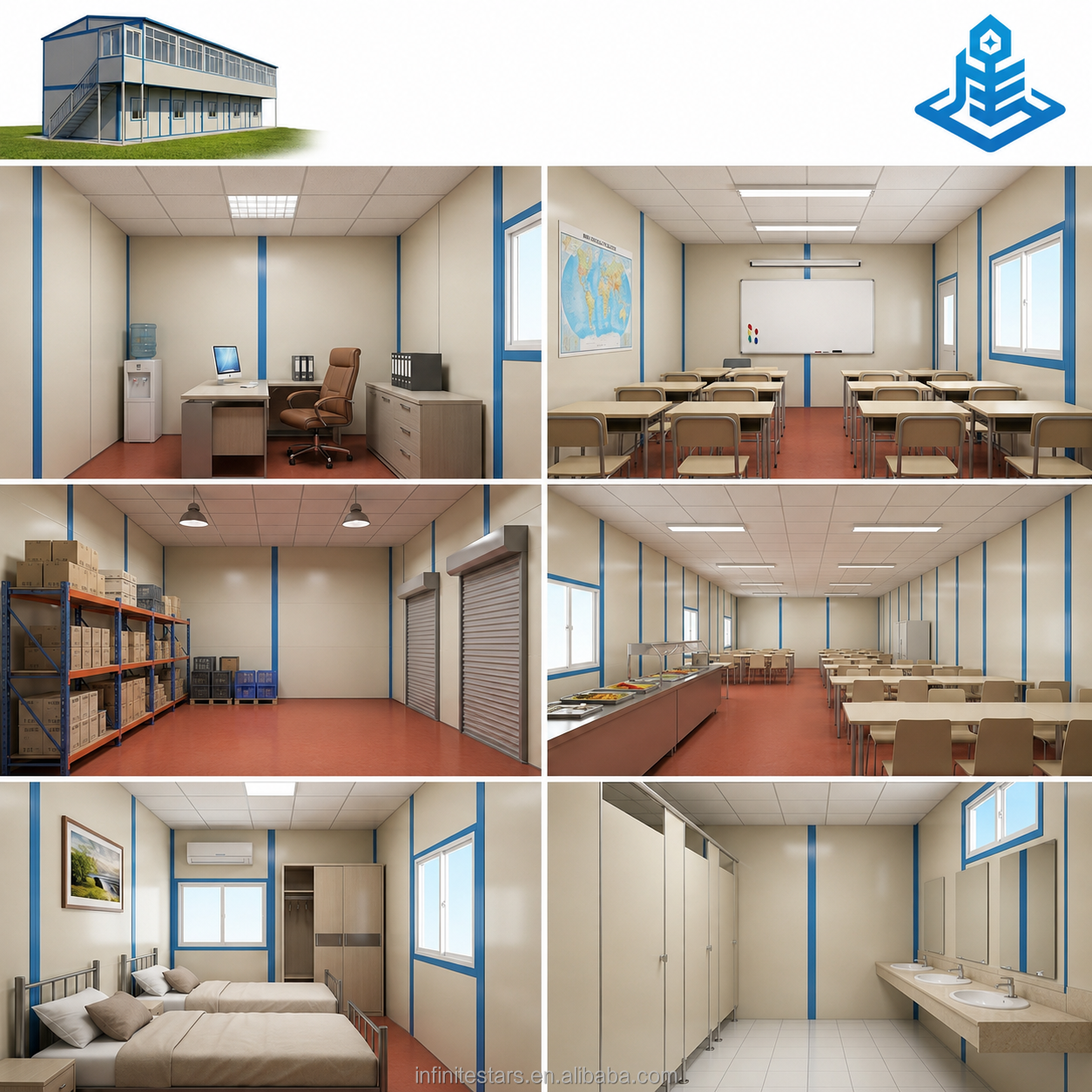
  • [Aesthetic Wood-Texture Facade] Cloaked in premium, high-simulation wood-grain siding, this system removes the industrial 'metal container' look, creating a warm, premium aesthetic for schools, student dorms, and administrative HQs.
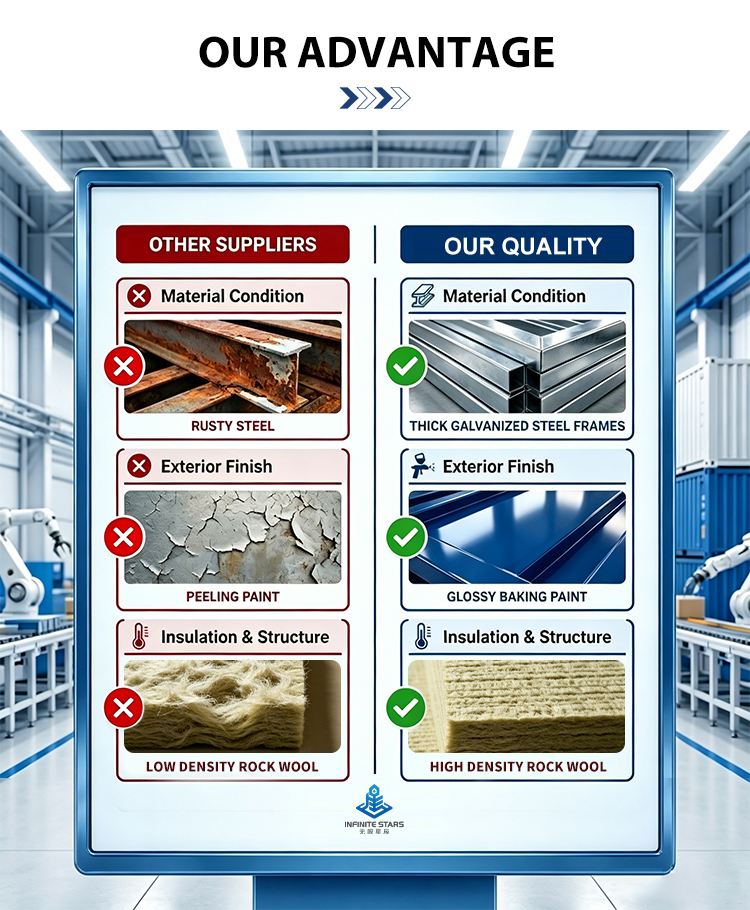
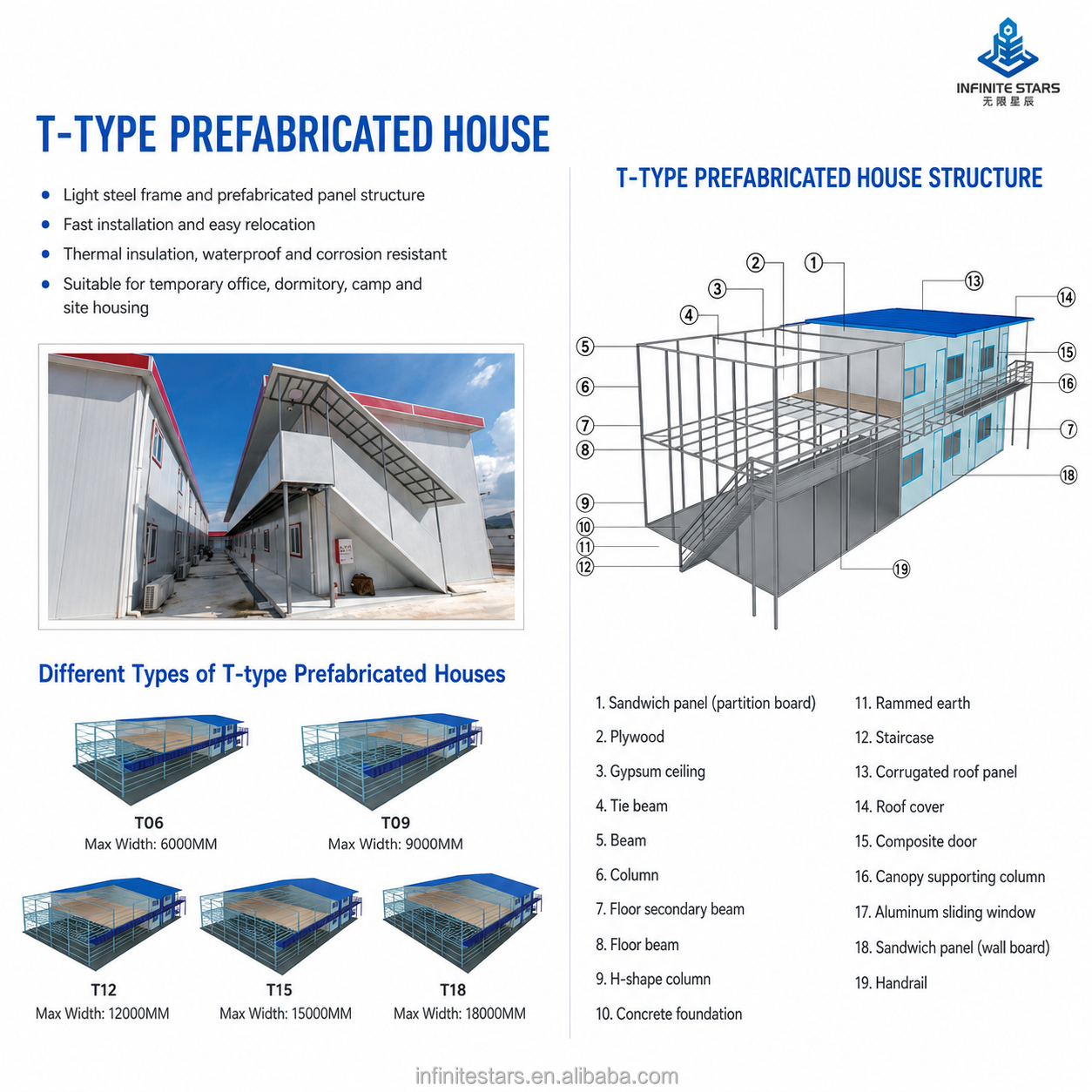
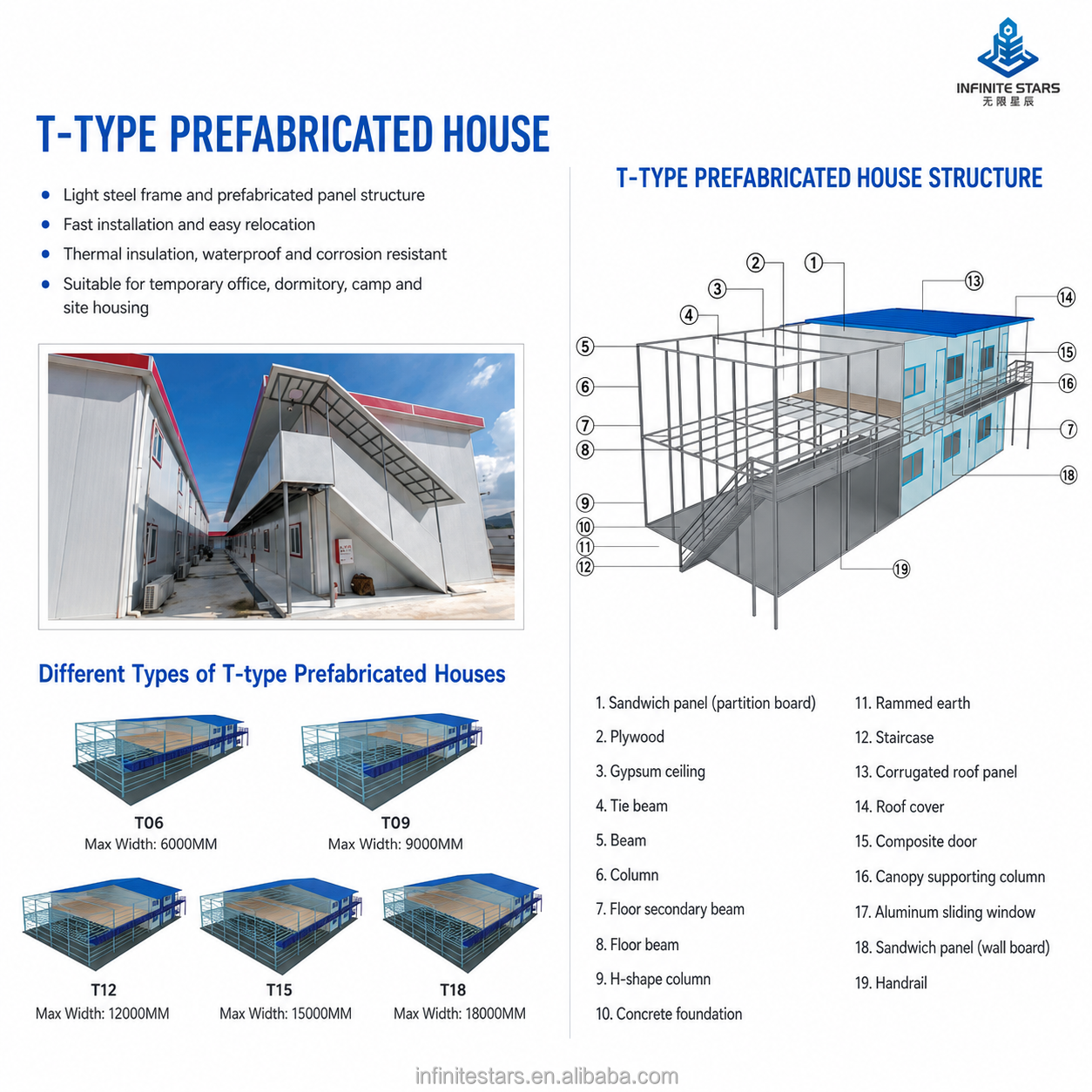
  • [Reinforced Open-Plan Framework] Utilizes an upgraded T-Type hidden steel frame with extra-strength steel structural floor joists and double fiber cement floor slabs, minimizing structural flexing, walk vibration, and sound echo.
  • [Expanded Classroom Window Systems] Configured with extra-wide sliding PVC windows that flood classrooms and lecture halls with bright, natural sunlight, enhancing learning conditions and saving electric lighting energy.
  • [Safe, Certified Low-Emission Materials] Formulated with certified low-emission, VOC-free interior sandwich core panels and non-toxic wall claddings, creating a safe, healthy environment for children and administrative personnel.
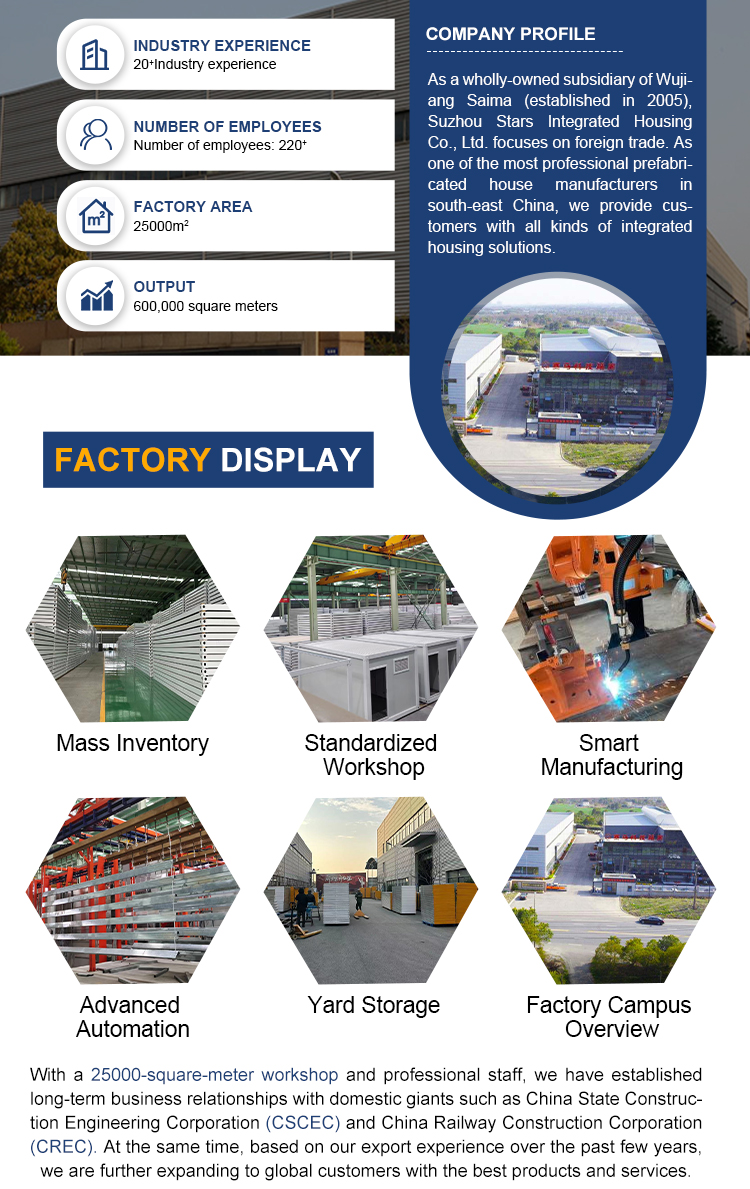
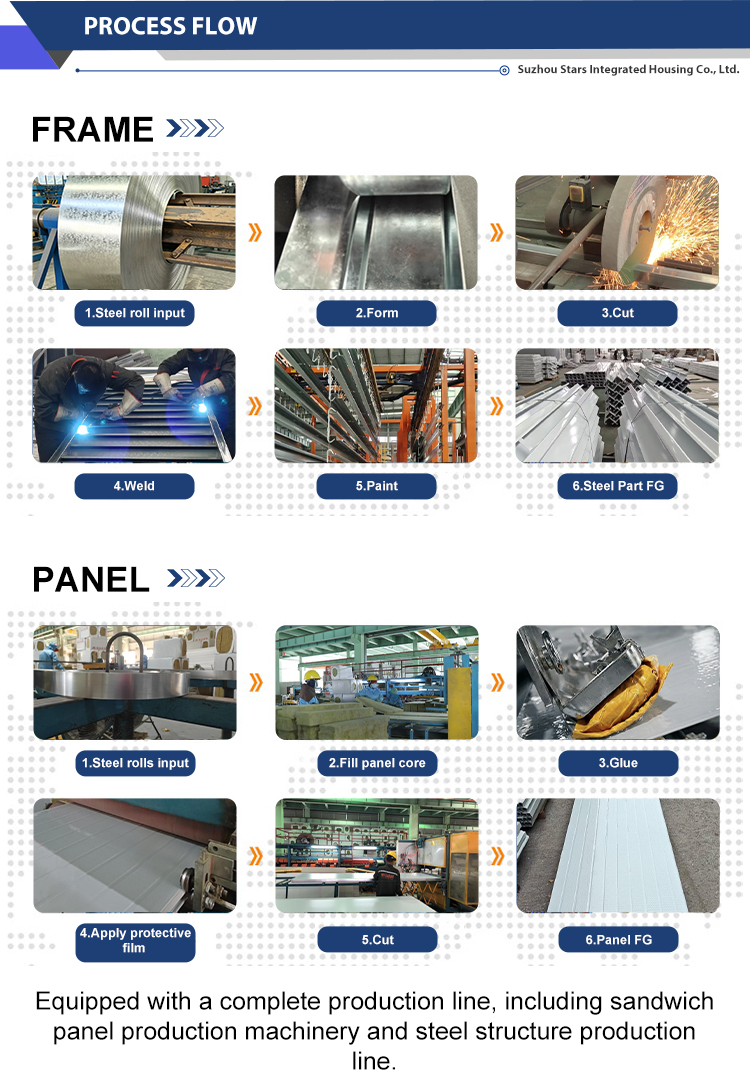
  • [Mega-Factory Direct Capacity] Automated 25,000㎡ factory line produces up to 10 fully configured school classrooms in less than 20 days, guaranteeing stable delivery schedules for major municipal tenders.
Product Overview
Modular School Building Two Story Prefab Classroom Wood Siding T Type Prefabricated House Community Dormitory
Product Specifications
Attribute Value
Product Type Prefabricated House
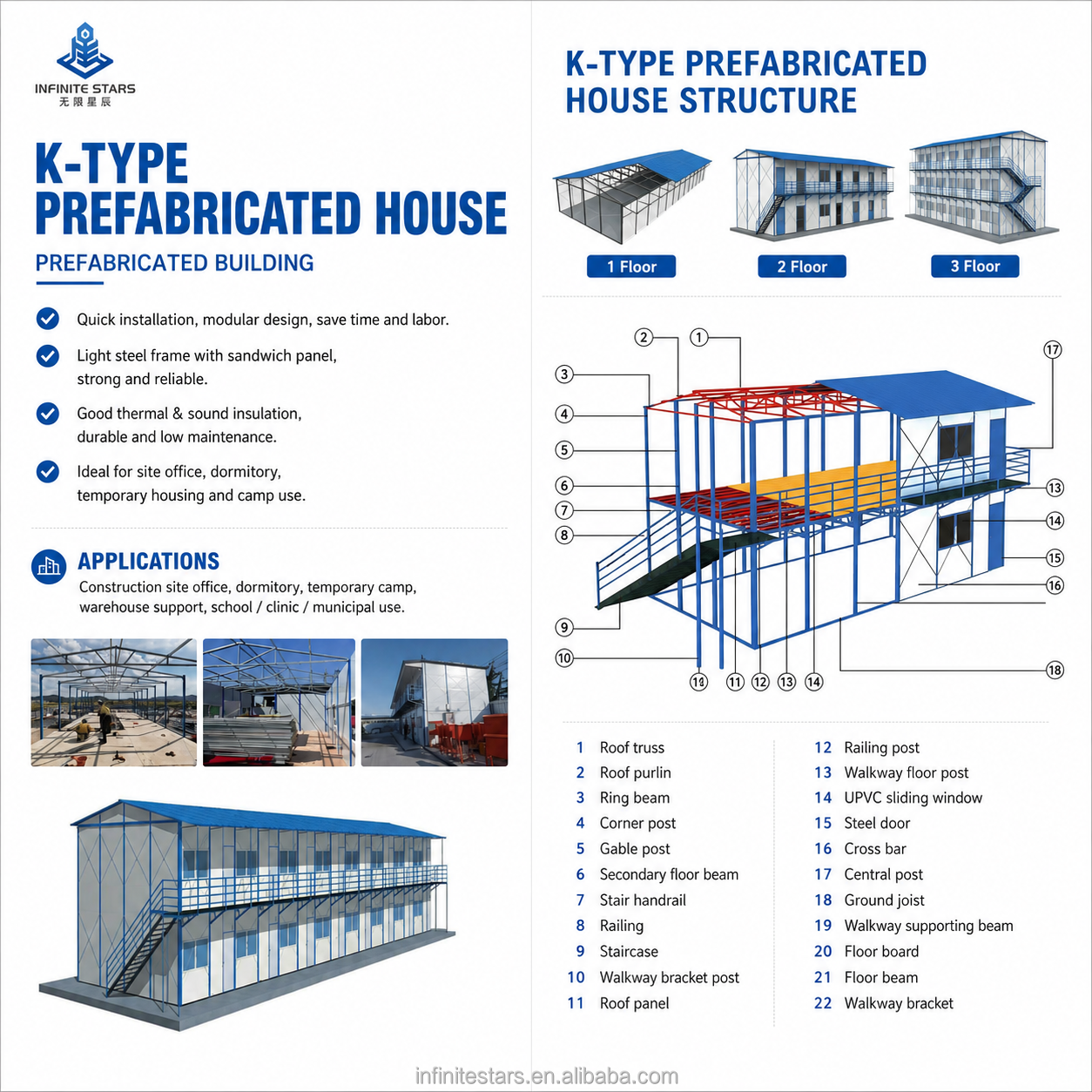
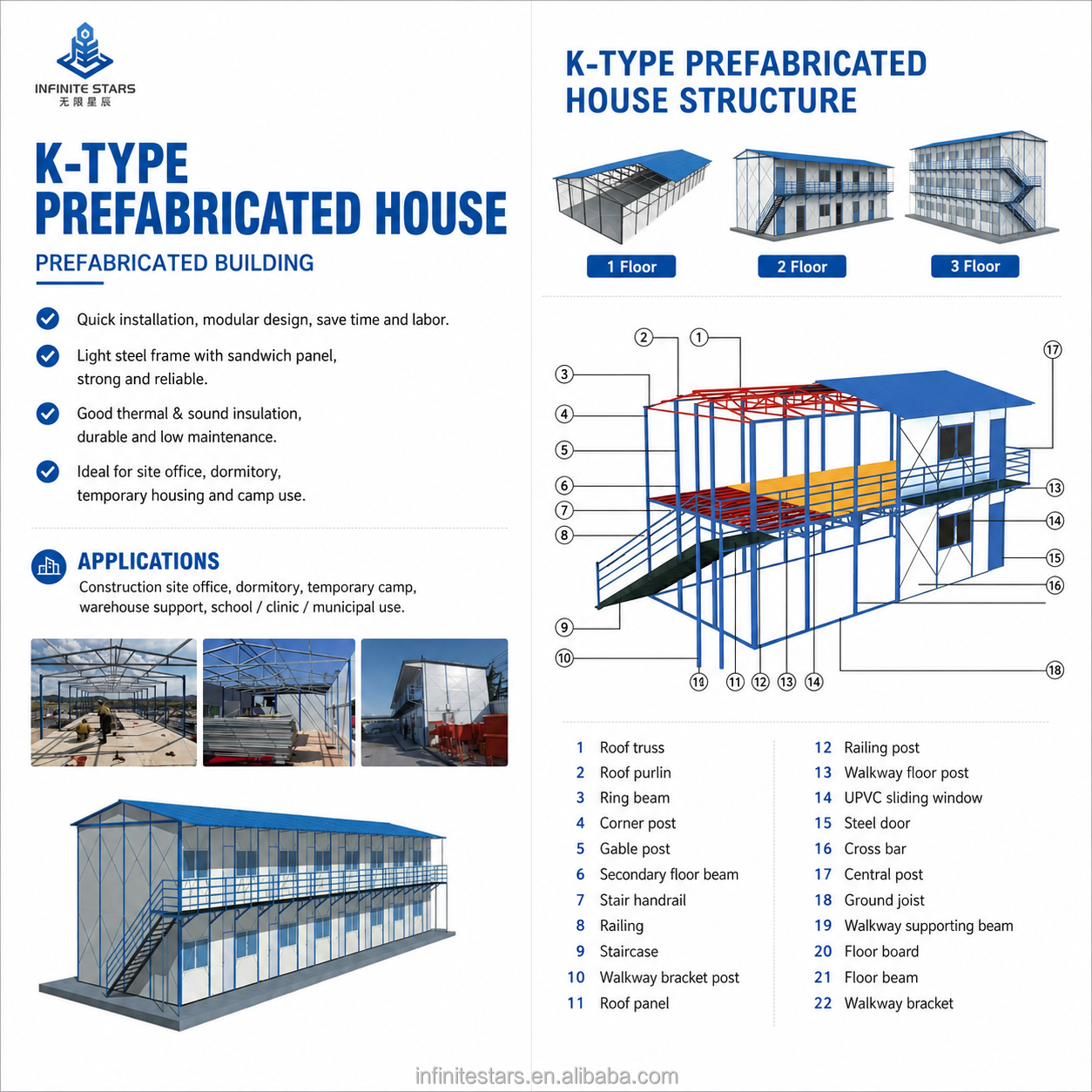
House Style T-Type / K-Type
Material Light Steel + Sandwich Panel
Sandwich Panel Core EPS / Rock Wool / PU
Color White, Blue, Gray, Customized
Floor 1-3 Floors
Size Customized
Design Service Available
Installation Guide Available
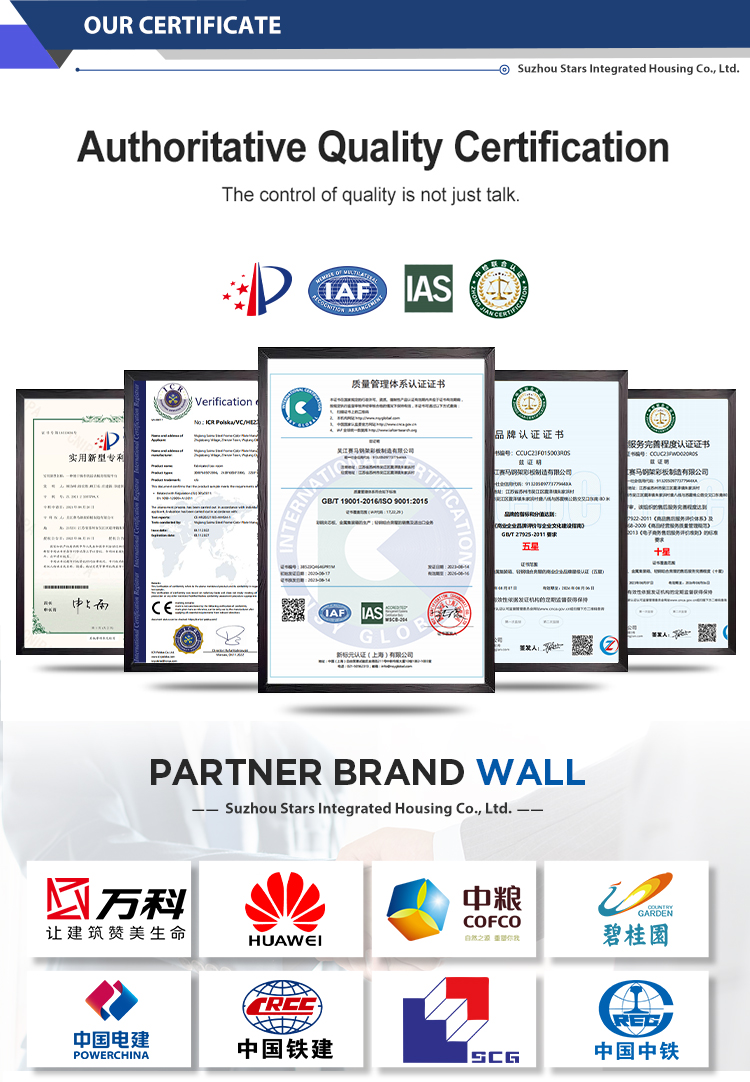
Certification ISO9001 / CE
Warranty 1-3 Years
Service Life 20+ Years
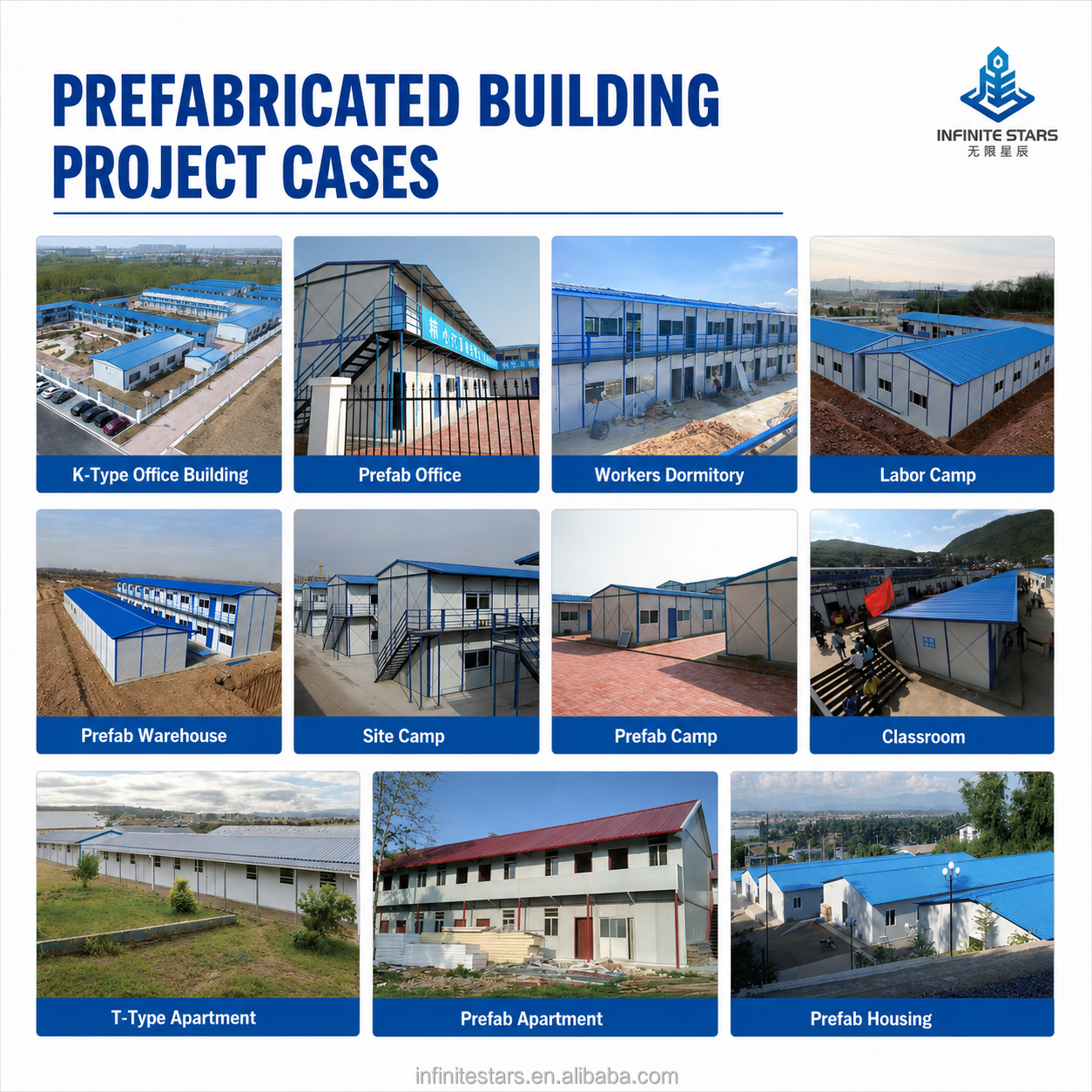
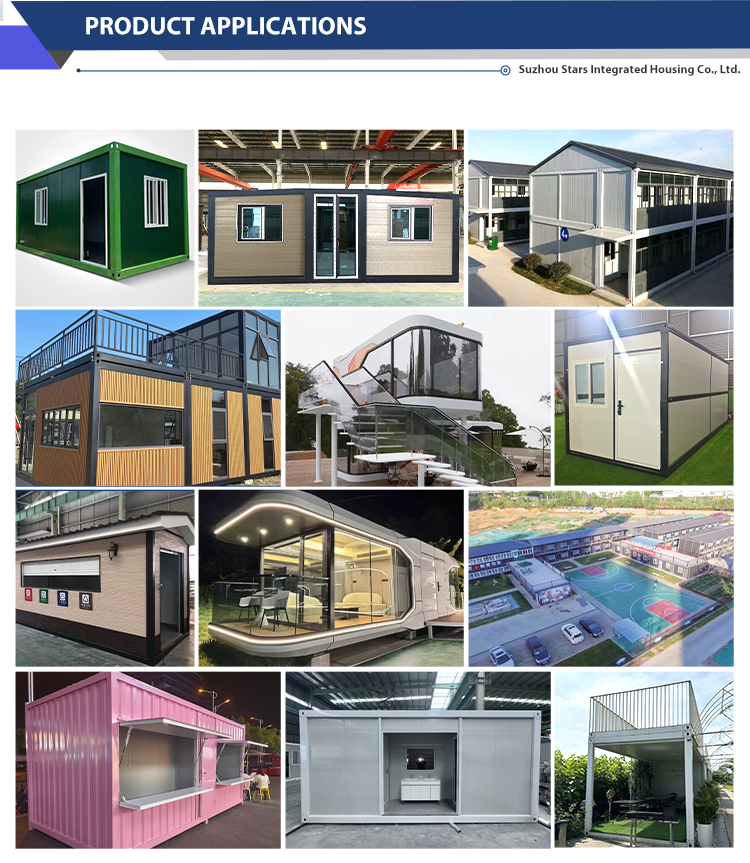
Application Office, Dormitory, Camp, School, Hospital, Warehouse
Detailed Architecture & Customizations
Modular School Building Two Story Prefab Classroom Wood Siding T Type Prefabricated House Community Dormitory
Detail 1
Detail 2
Detail 3
Detail 4
Detail 5
Detail 6
Structural View 1
Structural View 2
Structural View 3
Structural View 4
Structural View 5
Structural View 6
Structural View 7
Structural View 8
Structural View 9
Structural View 10
Structural View 11
Structural View 12
Frequently Asked Questions
What are the main advantages of container houses?
Fast construction, modular design, movable, relatively low cost, and strong structure.
What is the approximate cost of a container house?
Cost varies by size, modification level, interior finishing, and transportation/installation. Generally, a basic single-container house may cost a few thousand RMB, while high-end custom designs have no budget cap.
How long is the service life of a container house?
With proper anti-rust and anti-corrosion treatment, a container house can last 10-20 years, and in some cases up to 30 years or more.
Can container houses be stacked or combined into multi-story buildings?
Yes. With structural reinforcement and proper design, multiple containers can be stacked or joined to create duplexes, villas, office buildings, or even hotels.
How safe are container houses, especially in terms of wind and earthquake resistance?
Thanks to their steel structure, container houses have good wind and seismic resistance. They can generally withstand magnitude 8 earthquakes and typhoon-level winds (with proper foundation and connections).
Can container houses be used legally as permanent residences?
In some countries/regions, yes, provided they meet local building codes, obtain permits, and satisfy safety, sanitation, and insulation standards. Some areas only allow them as temporary auxiliary structures.

Related Products